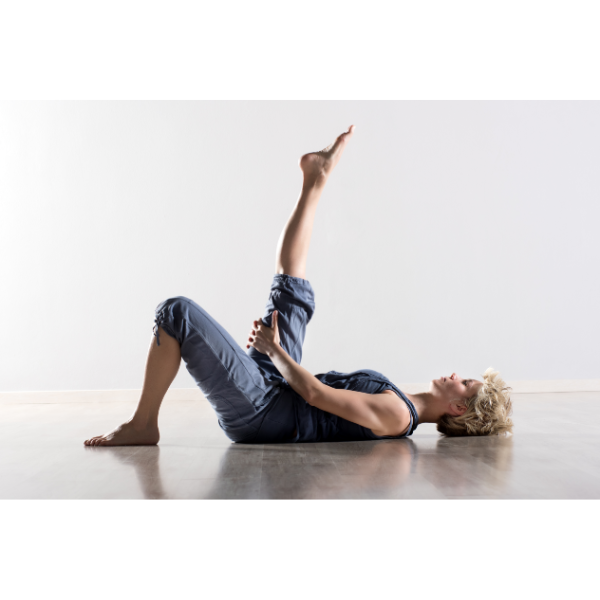
Lower back pain is very common. In fact, around 80 percent of people will experience it at some stage during their life, with over half of those people seeking medical advice or treatment. In this helpful guide, we’ll take a look at how regular, simple stretching and strengthening exercises can help relieve your lower back pain. We’ll answer commonly asked questions and provide helpful tips including:
- Lower back stretches
- Why is stretching important for lower back pain?
- How often should I stretch to relieve lower back pain?
- Lower back strengthening exercises
- How do strengthening exercises help with lower back pain?
- Are strengthening exercises safe with chronic lower back pain?
- 7 stretches and strengthening exercises for low back pain
- Hip flexor stretch
- Cat-camel stretch
- Child’s post
- Knee-to-chest stretch
- Piriformis stretch
- Standing forward bend
- Plank
Common causes of pain in the lower back

- Bad Posture
- Muscle or ligament strain (e.g., from repeated heavy lifting)
- Extended periods of time sitting
- Arthritis and osteoporosis
- Injury
- Disc degeneration
The good news is there’s a lot you can do at home that will significantly help reduce pain. Even better? You don’t have to spend a cent or take huge chunks of time out of your day.
The combination of stretching and strengthening creates a powerful synergy that not only relieves pain but also enhances the body’s ability to prevent future occurrences.
Preventing further lower back pain
Rushing through exercises, incorrect form, or pushing yourself too hard can aggravate back pain and do more harm than good. With that in mind, it’s recommended that you consult with an experienced health professional, such as Back Pain Auckland, before starting your at-home back strengthening exercises. You’ll receive:
- a thorough back pain assessment
- a programme of back strengthening exercises tailored to your specific needs
- advice and expertise to help treat your lower back pain effectively.
TOP TIP – Prevent lower back pain with these 9 daily habits.
Lower back stretches
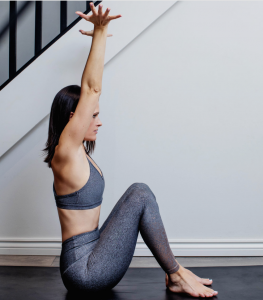 In today’s modern work environment, it’s not uncommon to be sitting at a computer for hours at a time. This can result in tight, tense, unhappy muscles. Over time, that can lead to chronic pain and reduced mobility. Stretching those tight muscles needs to be a priority if you want to avoid lower back pain.
Why is stretching important for lower back pain?
Stretching genuinely helps. It elongates and loosens tight muscles, releases tension, and improves the flexibility and mobility of your lower back and hips — which is exactly why it’s worth doing consistently.
But it’s worth being honest about what stretching can and can’t do on its own. Stretching addresses tension — the symptom of tight, overworked muscles. It doesn’t address why those muscles became tight and overworked in the first place, which is usually a combination of postural habits, weak core stability, and old compensation patterns.
That’s the same distinction we cover in The Real Cause of Lower Back Pain That Keeps Coming Back — stretching is a genuinely useful tool for managing tension day to day, but it works best as part of a broader approach, not as the whole solution.
How often should I stretch to relieve lower back pain?
Consistency is key when it comes to stretching for lower back pain. Even a few minutes of stretching each day can deliver big benefits. Don’t worry, you don’t need to do more than you can manage. The best approach is to start off slowly and gradually increase the duration and intensity of your stretches as your flexibility improves.
Lower back strengthening exercises

Lower back pain can be debilitating, impacting quality of life and overall wellbeing. A proactive approach through lower back strengthening exercises can be transformative.
How do strengthening exercises help with lower back pain?
In addition to stretching, strengthening exercises further help to improve muscle support and spine stability. By targeting the core muscles, including the abdominals, obliques, and glutes, strengthening exercises reduce the risk of further injury, promote better posture, and enhance spinal alignment. This in turn alleviates lower back pain and promotes a strong, healthy back.
Are strengthening exercises safe with chronic lower back pain?
Back strengthening exercises can be beneficial even if you have chronic lower back pain. However, it is important to consult with a professional such as Back Pain Auckland to develop an exercise program tailored to your specific needs and limitations.
7 top stretching and strengthening exercises
Ready to start stretching and strengthening your lower back? These simple exercises are a great place to start.
Hip flexor stretch

One highly effective stretch to ease lower back pain is the kneeling hip flexor stretch. This stretch targets the hip flexors, which can become tight due to prolonged sitting or inactivity.
- Start by kneeling on one knee, placing the other foot flat on the ground in front of you.
- Gently push your hips forward while keeping your back straight. You should feel a gentle stretch in the front of your hip and the lower back region.
- Hold the stretch for 30 seconds and repeat on the other side. Repeat 3-5 times on each side.
Cat-camel stretch
As you alternate between arching and rounding the back, this stretch helps improve spinal flexibility and reduce muscle tension. It also targets the deep core muscles, enhancing stability and supporting the overall strength of the back.
- Start on your hands and knees, with your hands directly under your shoulders and your knees under your hips.
- Arch your back up towards the ceiling, tucking your chin into your chest (cat pose).
- Slowly lower your belly towards the floor, lifting your head and tailbone towards the ceiling (camel pose).
- Repeat the cat-camel movement 10-15 times, flowing smoothly between the two positions.
Child’s pose
By assuming a kneeling position and gently folding the body forward, this stretch helps elongate the spine, releasing tension in the back muscles and promoting a sense of relaxation.
- Start on your hands and knees, then slowly sit back onto your heels.
- Extend your arms forward and lower your chest towards the floor, allowing your forehead to rest on the ground or a cushion.
- Gently press your hips towards your heels, feeling a stretch in your lower back.
- Hold the position for 30 seconds to 1 minute while taking slow, deep rhythmical breaths.
Knee-to-chest stretch
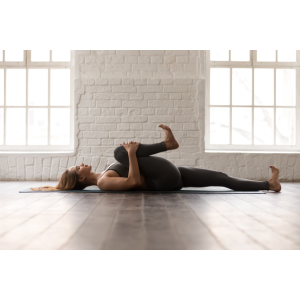
Lying on your back and gently pulling one knee towards the chest, this stretch helps lengthen and decompress the spine, relieving pressure on the lower back. It also stretches the glutes and hip flexors, promoting improved flexibility and range of motion.
- Lie flat on your back with your legs extended.
- Slowly bring one knee towards your chest, using both hands to gently pull it closer until you feel a stretch in your lower back.
- Hold the position for 20-30 seconds, then release and repeat with the other leg.
- Perform the stretch 2-3 times on each side.
Piriformis stretch
By crossing one leg over the other and gently pulling the knee towards the opposite shoulder, this stretch specifically targets the piriformis muscle, which can contribute to back pain when tight or inflamed.
- Lie on your back with your knees bent and feet flat on the floor.
- cross your right ankle over your left knee, creating a figure-four shape.
- Use your hands to gently pull your left thigh towards your chest until you feel a stretch in your buttocks and outer hip.
- Hold the stretch for 20-30 seconds, then switch sides and repeat.
- Perform the stretch 2-3 times on each side.
Forward bend stretch
By standing tall and folding forward from the hips, this stretch helps release tension and tightness in the back muscles. It also encourages gentle traction of the spine, which can alleviate compression and promote spinal decompression.
- Stand with your feet hip-width apart and slowly bend forward from your hips.
- Allow your upper body to hang over your legs and let your arms dangle towards the ground or reach for your ankles.
- Relax your neck and shoulders and feel the stretch in your lower back and hamstrings.
- Hold the position for 30 seconds to 1 minute, taking slow breaths.
Plank strengthening exercise
 A very effective strengthening exercise for the lower back is the ‘plank’. This exercise targets the deep abdominal muscles and the muscles in your back, promoting a stable and pain-free lower back.
- Begin by positioning yourself lying on the floor, face down, resting on your forearms and toes, knees if needed.
- Lift your body off the ground, maintaining a straight line from your head to your heels.
- Engage your core muscles and hold this position for as long as possible before you feel an increased arch in your lower back. Gradually increase the duration as your strength improves.
Stretching helps, but the tightness keeps coming back?
That usually means something underneath hasn’t changed. A root-cause assessment finds what’s driving your pain and gives you a plan to fix it.
Stretches for Sciatic Nerve Tension
If your lower back pain travels down into your hip, buttock, or leg, it may involve the sciatic nerve rather than the lower back alone. The piriformis stretch above is a good starting point — a tight piriformis muscle sits close to the sciatic nerve and is a common contributor to this kind of referred pain.
For a fuller breakdown of sciatica-specific causes and stretches, see our dedicated guide on sciatica and back pain. If your pain has that travelling, radiating quality, it’s worth getting it properly assessed rather than guessing — sciatic pain can stem from several different underlying causes, each responding better to a slightly different approach.
Stretches to Avoid If You Have Chronic Lower Back Pain
Not every stretch is a good idea for every back. A few generally worth approaching with caution if you have chronic lower back pain, particularly a disc-related issue:
Unsupported toe touches. Standing and rounding forward to touch your toes places significant flexion load through the lower spine and discs — often more than it’s worth for the hamstring benefit gained.
Deep, uncontrolled spinal twists. Twisting through a rounded, unsupported spine — rather than a braced, controlled one — can aggravate disc-related pain in particular.
Full sit-ups. Repeated spinal flexion under load is a common aggravator for chronic lower back pain — planks and similar stability work are generally a safer way to build core strength.
If you’ve been told you have a herniated disc or disc bulge, these movements are particularly worth avoiding until you’ve had a proper assessment — what’s safe varies significantly from person to person, which is exactly why generic advice can only take you so far.
When Stretching Isn’t Enough
If you’ve been stretching consistently for weeks and the same tightness keeps coming back in the same spot, that’s usually a sign the stretching is managing a symptom rather than resolving what’s causing it.
This is the pattern we see most often: someone stretches, feels better for a day or two, and then the tension returns — because the postural habit or muscular imbalance behind it hasn’t actually changed. Corrective exercise is specifically built to address that underlying pattern, rather than just the tension it produces.
A proper back pain assessment can tell you whether stretching alone is realistically going to resolve your pain, or whether it’s time to address the root cause directly.
Ready to finally get on top of your lower back pain?
Adding in regular stretching and strengthening exercises to your daily routine is easy and effective. And it offers a multitude of benefits beyond pain relief. You’ll also benefit from an improvement in your overall posture, flexibility, and physical performance.
A strong, balanced back means not having to think twice before you do those little things that others seem to take for granted. It means not having to rely on painkillers to get you through the day. It means you can live life to the fullest.
Don’t put up with the frustration and limitations of back pain any longer. Book your consultation with Back Pain Auckland today.
Stretching helps, but the tightness keeps coming back?
That usually means something underneath hasn’t changed. A root-cause assessment finds what’s driving your pain and gives you a plan to fix it.