
If you’re reading this, chances are you’ve already tried something. Maybe physio. Maybe a chiropractor. Maybe painkillers, a foam roller, a new mattress, or all of the above. And for a while, it probably helped — the pain eased, you started to relax, you thought you’d finally turned a corner.
Then it came back.
If that cycle sounds familiar, you’re not imagining it, and you’re not doing anything wrong. It’s one of the most common patterns we see in people who come to us with chronic lower back pain — and it almost always comes down to one thing: the treatment addressed the symptom, not the cause.
You’re also not alone in the strict statistical sense. Research published in the Journal of Physiotherapy followed people who had fully recovered from an episode of low back pain and found that 69% experienced a recurrence within 12 months — most of them within about four to five months of feeling better. Back pain that returns isn’t the unusual case. It’s the norm when the underlying cause was never dealt with.
This guide walks through the real cause of lower back pain that keeps coming back, what’s usually driving it underneath the surface even after treatment, and what it actually takes to fix it for good — not just quiet it down for a few weeks.
The Most Common Lower Back Pain Causes, at a Glance

Before we go deep, here’s the short version. Across the recurring, chronic back pain cases we see, three lower back pain causes show up again and again — usually in combination rather than alone:
- Postural imbalance and excessive lumbar curvature — years of sitting and screen time gradually pulling the pelvis and spine out of alignment
- Weak or dysfunctional core, hip muscles — deep stabilising muscles that aren’t switching on properly during everyday movement
- Old sports injuries and compensation patterns — movement habits your body built around a past injury that never switched off
The rest of this guide covers each of these in detail, why standard physio and chiro treatment often can’t fully resolve them, and what a proper root-cause approach actually involves.
Why Chronic Back Pain Keeps Returning (Even After Treatment)
 Most back pain treatments are built to do one job well: reduce pain, right now. A chiropractic adjustment, a deep tissue massage, an anti-inflammatory — these can all genuinely ease discomfort, sometimes dramatically. But relief isn’t the same thing as resolution.
Here’s the pattern we see over and over. Someone’s back seizes up or starts aching. They get treated — the muscle tension releases, the joint moves more freely, the pain settles. Everyone’s happy. But a few weeks or months later, it’s back. Sometimes worse. Sometimes in a slightly different spot.
That’s because the thing that caused the tension or restriction in the first place — a postural imbalance, a weak core, an old compensation pattern — was never actually addressed. It was still there the whole time, quietly loading the same structures, waiting to flare up again the moment life gets busy, stressful, or physical.
Think of it like a leaking pipe. You can mop up the water every time it appears, and the floor will look dry — for a while. But until someone fixes the actual leak, you’re going to be mopping again. Chronic back pain that keeps coming back, despite treatment after treatment, is almost always a sign that something upstream hasn’t been dealt with yet.
Recognise yourself in this?
If you’ve tried physio, chiro or massage and the pain keeps returning, it’s time to find the real cause. Our assessment pinpoints exactly what’s driving your back pain.
The Most Common Root Causes of Chronic Lower Back Pain
So what actually causes lower back pain to keep returning? In our experience working with people who’ve been through this cycle multiple times, three underlying issues show up again and again. Rarely is it just one in isolation — usually it’s a combination, and untangling which of these apply to you is exactly what a proper assessment is for.
Postural imbalance and excessive lumbar curvature

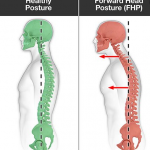
Years of sitting, screen time, and modern daily habits gradually pull the pelvis and lower spine out of their natural alignment. One of the most common patterns we assess for is excessive lumbar curvature — where the lower back sits in a more arched position than it should, placing sustained extra load on the joints and discs in that area.
This kind of imbalance doesn’t hurt on day one. It builds slowly, over months or years, until the tissue simply can’t compensate anymore — and that’s usually when the pain shows up, often triggered by something as ordinary as bending to pick up a bag.
Weak or dysfunctional core muscles
Core strength gets thrown around a lot, but it’s not just about how many sit-ups you can do. It’s about whether the deep stabilising muscles around your spine and pelvis are actually switching on and doing their job when you move, lift, twist, or simply sit for long periods.
When these muscles are underactive or firing in the wrong sequence, the surrounding structures — discs, joints, superficial muscles — end up taking on load they weren’t designed to carry alone. Over time, that’s a direct path to recurring pain.
Old sports injuries and compensation patterns

If you’ve ever had a significant injury — a hamstring tear, a shoulder problem, a knee reconstruction, even something that happened decades ago — your body likely adapted around it at the time. Those compensation patterns often don’t switch off once the original injury heals. They become habits, quietly altering how you move and where load gets distributed.
This is particularly common in former athletes and people who were active in sport when younger. The original injury is long forgotten, but the movement pattern it created is still running the show — and the lower back often ends up carrying the load.
Other Possible Causes of Lower Back Pain (And When to Look Beyond These Three)
The three patterns above account for the large majority of the chronic, recurring back pain cases we see, but they’re not the only possible causes of lower back pain. It’s worth knowing what else is in the picture so you have a realistic sense of where your own pain might fit.
Disc-related issues — a disc bulge or herniated disc — are common and can produce symptoms that overlap heavily with postural and muscular causes, including pain that radiates into the leg. A scan showing a disc bulge isn’t automatically the explanation for your pain, either — bulging discs show up in plenty of pain-free people too, which is part of why the movement-pattern assessment matters as much as any imaging.
Sciatica — nerve-related pain running down the hip or leg is often a downstream symptom of one of the three root causes above, particularly postural loading or a disc issue, rather than a separate condition in its own right.
Inflammatory or systemic conditions, such as ankylosing spondylitis, are less common but are managed medically rather than through corrective exercise alone, and are worth ruling out with a GP if your pain doesn’t fit the more typical mechanical pattern, especially if it’s worse at rest, worse overnight, or comes with stiffness lasting more than 30 minutes each morning.
If any of this sounds closer to your experience, it’s still worth starting with a proper assessment — the same process described below will usually clarify fairly quickly which category your pain falls into, and whether you need a referral alongside it.
Why Physio and Chiro Alone Often Don’t Fix It

To be clear, this isn’t a knock on physiotherapy or chiropractic care as professions — both can be genuinely valuable, particularly for acute injuries, post-surgical recovery, or short-term pain relief. They’re just aimed at a different kind of problem — acute pain, not the chronic, recurring kind.
Manual therapy adjustments, mobilisations, massage works primarily on the symptom layer.
It can restore movement, reduce muscle guarding, and ease pain, often very effectively and very quickly. What it typically doesn’t do on its own is retrain the underlying movement pattern that created the problem in the first place.
That’s not a criticism of the practitioners — it’s simply outside the scope of what hands-on treatment is designed to do. Retraining posture, rebuilding core function, and correcting compensation patterns is a different kind of work: active, progressive, and usually requiring weeks or months of consistent, personalised exercise — not a single session of manual intervention.
If you’re wondering exactly what that retraining process looks like in practice, we break it down in What is corrective exercise – and can it really fix lower back pain?
If you’ve been to physio or chiro multiple times for the same back pain and it keeps returning, this is very often why. The treatment was doing its job. It just wasn’t the whole job — and the recurrence research above backs that up: without addressing what’s driving the pattern, the odds are that it comes back.
How a Root-Cause Assessment Works

A proper root-cause assessment starts from a different question than most standard consultations. Instead of “where does it hurt, and how do we make that stop today,” it asks “what’s actually causing this pattern, and what needs to change so it stops happening at all.”
In practice, that means testing more than the painful area itself. A thorough assessment looks at:
- Posture and spinal alignment — how your pelvis, spine, and joints are sitting and moving relative to each other, at rest and under load
- Core and muscular function — whether the muscles that should be stabilising your spine are actually doing so, or whether other muscles are compensating
- Movement patterns and history — how you move day-to-day, and whether old injuries or habits are still shaping the way you carry yourself
This is a meaningfully different process from a standard physio or chiro assessment, which is often understandably focused on the immediate presenting symptom rather than the full-body picture. A root-cause assessment takes longer — usually around an hour — because it’s building a complete map of what’s driving the pain, not just identifying where it hurts.
If you’re curious what this looks like in practice, our back pain assessment process walks through it in more detail.
The Mind-Body Connection in Chronic Pain
 There’s a part of chronic pain recovery that rarely gets talked about openly: fear.
If you’ve had a bad flare-up — especially one that came out of nowhere, during something ordinary like bending, lifting, or twisting — it’s completely natural to become cautious. Guarded. Hesitant to move the way you used to. Understandable as that is, it can quietly become part of the problem.
When you tense up in anticipation of pain, or avoid certain movements altogether, you often end up creating new compensation patterns — the same mechanism discussed earlier, but now driven by fear rather than injury. Muscles that should be relaxed stay braced. Movements that should be smooth become guarded and awkward. And ironically, that guarding can itself become a source of ongoing discomfort.
This is why we treat the mind-body element as a genuine part of recovery, not an afterthought. Rebuilding confidence in your body’s ability to move safely is just as important as the physical corrective work — because a corrective exercise programme only works long-term if you’re actually willing to move through it, rather than bracing against it.
What Recovery Actually Looks Like
 We won’t pretend there’s a universal timeline — everyone’s starting point is different, and how long the imbalance has been building matters. But here’s what’s realistic, based on what we typically see.
Early sessions are usually about assessment and starting to correct the most significant imbalances — this is often where people first notice a change in day-to-day discomfort, like being able to sit through a full workday or get through a gym session without bracing for a flare-up.
From there, consistent corrective exercise work over a period of weeks to months is what shifts things from “better for now” to “genuinely more resilience going forward.” There’s no shortcut through this part — root-cause change takes time and commitment.
A pattern worth naming: it’s common for someone to come in after years of managing back pain around a desk job — a string of physio visits, the odd chiro adjustment when things flare, painkillers on the bad days — with the pain always easing off but never quite disappearing.
The story is rarely one single dramatic injury. It’s usually a slow build of sitting posture, an underused core, and maybe an old sporting injury nobody’s thought about in a decade, all stacking on top of each other. That combination is exactly why symptom-level treatment keeps having to start again from scratch.
What’s different by the end isn’t just less pain. It’s understanding why the pain was happening, and having the tools and movement patterns to keep it from becoming a recurring cycle again. That’s the real distinction between masking a symptom and resolving a root cause.
Frequently Asked Questions
What are the most common causes of lower back pain that keeps coming back?
The most common lower back pain causes we see in recurring cases are postural imbalance (particularly excessive lumbar curvature), weak or dysfunctional core muscles, and old compensation patterns from past injuries. These usually work together rather than in isolation, which is part of why a single cause is rarely the full explanation.
What causes lower back pain to keep coming back?
Most treatments — adjustments, massage, painkillers — target pain relief rather than the underlying cause. If a postural imbalance, weak core, or old compensation pattern hasn’t been addressed, the same conditions that caused the pain the first time are still present, so it tends to return once things settle back into old patterns.
How do I know if my back pain is structural or something else?
Persistent lower back pain is very commonly linked to muscular imbalance, postural patterns, and movement dysfunction rather than serious structural damage. That said, red flags like unexplained weight loss, numbness, or loss of bladder/bowel control should always be checked by a GP first — a proper assessment can then look at what’s driving the pain day-to-day.
How long does it take to fix chronic back pain?
It depends on how long the underlying imbalance has been building and how consistently a corrective programme is followed, but most people notice a meaningful shift within the first few weeks, with more lasting change building over the following months.
Is corrective exercise better than physio or chiro for chronic back pain?
It’s less about “better” and more about “different.” Physio and chiro are often excellent for acute pain and short-term relief. Corrective exercise is specifically built for chronic, recurring pain, because it addresses the postural and movement causes that manual therapy alone doesn’t retrain.
About the Author – Shane Lyons

Shane Lyons is a CHEK-certified Exercise Coach and Back Pain Specialist based in Auckland, working with clients on chronic, recurring back pain through root-cause assessment and personalised corrective exercise programmes.
His approach focuses on identifying and retraining the postural and movement patterns behind long-standing pain, rather than treating each flare-up in isolation.
If this sounds like your story, the next step is a comprehensive assessment — not another guess. Book your assessment with Shane and find out what’s actually been driving your pain.
Recognise yourself in this?
If you’ve tried physio, chiro or massage and the pain keeps returning, it’s time to find the real cause. Our assessment pinpoints exactly what’s driving your back pain.